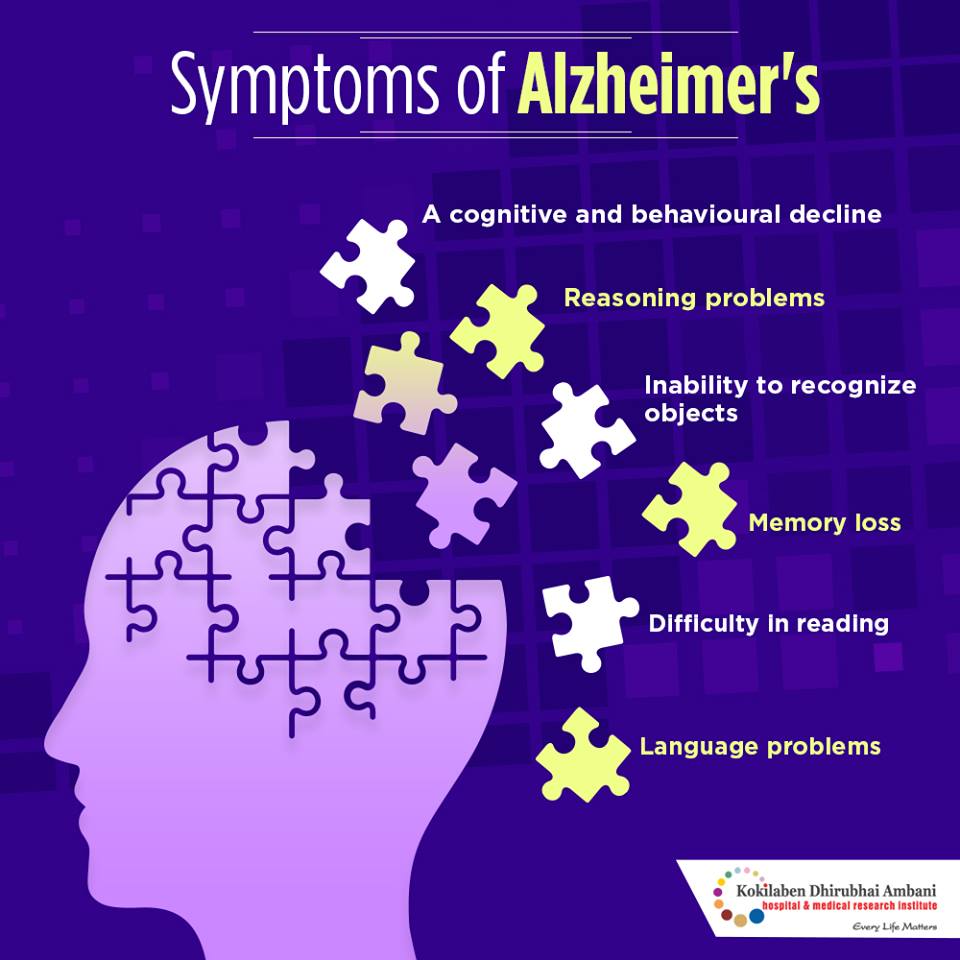
The course of alzheimer's is generally described in three stages, with a progressive pattern of cognitive and functional impairment.
 The three stages are described as early or mild, middle or moderate, and late or severe. The disease is known to target the hippocampus which is associated with memory , and this is responsible for the first symptoms of memory impairment. As the disease progresses so does the degree of memory impairment.
The symptoms of alzheimer's disease worsen over time, although the rate at which the disease progresses varies. On average, a person with alzheimer's lives four to eight years after diagnosis, but can live as long as 20 years, depending on other factors. Changes in the brain related to alzheimer's begin years before any signs of the disease. This time period, which can last for years, is referred to as preclinical alzheimer's disease. The stages below provide an overall idea of how abilities change once symptoms appear and should only be used as a general guide. (dementia is a general term to describe the symptoms of mental decline that accompany alzheimer’s and other brain diseases.
As dementia progresses, many people will need around-the-clock help with personal care, including toileting, showering, and transferring to and from bed or a chair. Alzheimer’s association. Stages of alzheimer’s. Found on the internet at https://www. Alz. Org/alzheimers-dementia/stages “given their memory impairment,” edmonds said, “people with dementia may not understand they need this high level of care. That’s where the specialized training of memory care staff is important. ”.
In the early stages of a memory loss condition, family members and close friends may be able to care for their loved ones. But as the condition progresses, it can be safer for them to move into a residential care community. According to the cdc , half of all residents of long-term care communities have alzheimer's disease or another form of dementia. For enhanced safety and to receive specialized care from experienced caregivers, many families choose to move their loved ones into a memory care community. Additionally, those communities strive to provide a comfortable and appealing environment so that residents can maintain a high standard of living.
Charitable Care & Financial Assistance
People in the late stage of alzheimer’s disease can’t carry on conversations, lose awareness of what’s going on around them and can’t control their movement. Difficulties may include:
being more prone to infections, especially pneumonia. Requiring 24-hour assistance with care. A note from cleveland clinic
learning early that you have a diagnosis of dementia allows you and your family to plan for a meaningful quality of life together and enables you to get your legal, financial and healthcare plans and desires in order.
Your healthcare team, including clinicians, social workers, hospice and pastoral care members, is ready to provide education, support and care for you or your loved one.
If your loved one is having difficulty with activities of daily living or facing increased challenges with remembering things, memory care might be a thoughtful and beneficial option. Memory care is a form of long-term senior living specifically designed for individuals who are facing impairments with their memory and cognitive abilities, often due to conditions such as alzheimer’s disease or other forms of dementia. This specialized care is provided by trained employees who understand the unique needs of people with memory-related issues. A memory care community can offer a safe and supportive environment where residents can receive the personalized attention and assistance they need to help them thrive and make the most of each day.
Dementia reduces a person's cognitive function and ability to perform routine activities; it also is often associated with challenging behaviors (alzheimer's association, 2016 ; nia, 2016 ). As dementia progresses, an individual will eventually require assistance with activities of daily living (adls) (e. G. , eating, grooming, mobility) and instrumental activities of daily living (iadls) (e. G. , meal preparation, shopping, financial and medication management) (karon et al. , 2015). Additional medical and nursing care may also be required to manage coexisting medical conditions, multiple medications, incontinence, and mobility devices (reinhard, levine, & samis, 2012). As people with dementia require more assistance to meet their needs, their quality of life may be negatively affected (nia, 2017).
An individual may not require care assistance after the initial diagnosis of dementia, but that will change as the disease progresses and symptoms worsen. There are about 16 million unpaid caregivers of people with dementia in the united states. While many caregivers are providing daily help for family members, they also hire someone to help. There are many options for care assistance, such as in-home care , adult day care , and nursing home care. Financial assistance is available. Early stage dementia
people with mild cognitive impairment have mild changes in their memory and thinking ability. These changes aren't significant enough to affect work or relationships. People with mci may have memory lapses when it comes to information that is usually easily remembered. This may include conversations, recent events or appointments. People with mci also may have trouble judging the amount of time needed for a task. They may have trouble judging the number or order of steps needed to complete a task. The ability to make sound decisions can become harder. Not everyone with mild cognitive impairment has alzheimer's disease.
People with ad may show symptoms of the disease three to five years before diagnosis. This period, when changes are present but the full-blown disease is absent, is called “mild cognitive impairment” or mci. It is important to understand that not everyone with mci goes on to develop ad. In fact, as many as 40–50% may never develop the disease. (see the fca fact sheet mild cognitive impairment (mci). )early problems are often seen as normal changes due to aging, and only in retrospect do caregivers see that symptoms have been occurring for several years. Although on average, individuals survive four to eight years once diagnosed, living for 20 years is not all that unusual.